How to Choose the Right Dentist for Gum Disease Treatment

Gum disease has a way of creeping up on people. It often starts with bleeding when you floss, a little tenderness along the gumline, or breath that never quite feels fresh no matter how carefully you brush. Because the early signs can seem minor, many people do not realize they need help until the problem has advanced. At that point, choosing the right dentist matters far more than picking the nearest office with an open appointment.
Not every dental practice approaches periodontal problems with the same depth, urgency, or long-term planning. Some offices are excellent for routine cleanings and fillings but less equipped to manage active gum infection, bone loss, or complex maintenance. Others build much of their practice around periodontal care and can spot subtle warning signs that change a patient’s outcome.
If you are looking for Gum Disease Treatment, the goal is not simply to find a dentist who can clean your teeth. You want someone who can diagnose accurately, explain what is happening under the gums, recommend treatment that matches the severity of the disease, and help you keep the condition under control for years. Gum disease is rarely a one-visit issue. It is managed over time, and the relationship with your dental team becomes part of the treatment itself.
Why the choice of dentist affects the result
Gum disease exists on a spectrum. Mild gingivitis can often improve with professional cleaning and better home care. Periodontitis is different. Once there is attachment loss, pocketing, or bone involvement, the condition requires a more targeted strategy. That may mean scaling and root planing, antimicrobial therapy, frequent periodontal maintenance, bite adjustment, or referral to a periodontist for surgery or regenerative procedures.
A dentist who underestimates the disease may offer a standard cleaning when deeper treatment is needed. A dentist who overstates the problem may push aggressive care before confirming the diagnosis. Neither scenario serves the patient well.
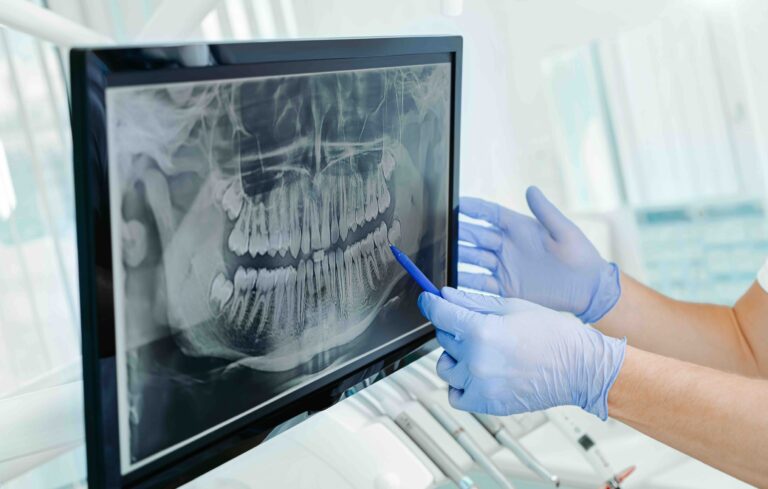
The right dentist knows how to distinguish inflamed gums from deeper periodontal breakdown. They measure pocket depths, assess bleeding patterns, review X-rays with a trained eye, and consider health factors that shape healing, such as smoking, diabetes, dry mouth, and certain medications. They also understand that the best treatment plan is not just clinically sound, but realistic. A plan that looks perfect on paper but does not fit a patient’s schedule, finances, or ability to maintain it usually fails.
I have seen patients move from office to office because they felt confused, rushed, or pressured. Often, what they wanted was not fancy language or a dramatic sales pitch. They wanted a dentist who could tell them plainly what stage of disease they had, what could be reversed, what could only be managed, and what the next six to twelve months would look like.
Start by understanding who should manage the case
Many cases of gum disease are handled well by a general dentist, especially when the dentist is experienced in periodontal therapy and works with a strong hygiene team. Some cases are better treated by a periodontist, a dental specialist focused on the prevention, diagnosis, and treatment of periodontal disease.
That does not mean a specialist is always necessary. If your condition is early, stable, and straightforward, a general dentist may be the right fit. If you have deep periodontal pockets, loose teeth, significant bone loss, gum recession, recurrent infection, or a history of treatment that did not hold, specialist involvement becomes more important.
A good general dentist knows where those lines are. One of the clearest signs of professionalism is a willingness to refer when the case calls for it. A dentist who insists on handling every situation in-house is not necessarily more skilled. In some cases, they may simply be reluctant to collaborate.
When you call an office, ask whether they routinely treat gum disease, whether they perform scaling and root planing, and whether they work with a periodontist when needed. The answer will tell you a lot about the depth of care available.
Look for a diagnostic process, not a quick opinion
A trustworthy evaluation of gum health takes more than a glance in the mouth. The first appointment should involve more than hearing, “Your gums are a little inflamed,” or, on the other extreme, “You need deep cleaning everywhere” without much explanation.
A proper periodontal assessment often includes pocket measurements around each tooth, checking for bleeding on probing, examining recession, evaluating tooth mobility, and reviewing current X-rays. In some offices, the dentist or hygienist will also compare the findings with old records if available. That matters because progression tells a different story than a single snapshot.
If you are told you need Gum Disease Treatment, ask to see the evidence. A good dentist can show you where pockets are deeper than normal, where calculus is sitting below the gumline, and where bone levels appear reduced on radiographs. They should be able to connect the findings to symptoms you actually notice, such as bleeding, bad taste, sensitivity, or looseness.
Be cautious if the office jumps straight to treatment without collecting enough data. Be equally cautious if they minimize obvious signs of disease because the visit was booked as a basic cleaning and they do not want to disrupt the schedule. Gum disease does not care what was on the calendar.
Communication is a clinical skill, not a bonus feature
Many patients judge a dentist by personality, and that is understandable, but communication in periodontal care goes deeper than being friendly. Gum disease can feel personal. It touches hygiene habits, smoking, stress, medical conditions, and fear of tooth loss. Patients need direct, respectful guidance, not scolding and not vague reassurance.
The right dentist explains the condition in plain English. They should tell you whether you have gingivitis or periodontitis, how severe it appears, and whether the goal is reversal, control, or long-term stabilization. Those distinctions matter. A patient who thinks one deep cleaning “cures” advanced periodontitis is almost guaranteed to be disappointed later.
Good communication also means setting expectations about discomfort, healing, costs, and maintenance. For example, after scaling and root planing, gums may feel tender for a few days, and sensitivity to cold is common. Periodontal pockets may improve, but some recession can become more noticeable as inflammation subsides. That is not necessarily a bad sign. It often reflects healthier, tighter tissue. Patients handle treatment much better when they are told this before it happens.
You should leave the consultation knowing what the plan is, why it was recommended, and what happens if you wait. If you leave with more confusion than clarity, keep looking.
Pay attention to the hygiene team
In many practices, periodontal care is carried heavily by the hygienists. That does not reduce the dentist’s importance. It simply reflects how gum disease is managed in real life. Cleanings, periodontal charting, maintenance intervals, home care coaching, and early detection often run through the hygiene department.
A strong hygiene team is usually a strong sign for gum care overall. Listen to how they speak about inflammation, home care, and maintenance. Are they precise? Do they personalize instructions? Do they explain why one tool is better for your mouth than another? A patient with crowded lower front teeth, for example, may benefit more from interdental brushes or a water flosser than from being told, again, to “just floss better.”
The best offices do not treat oral hygiene advice like a script. They adapt. Someone with arthritis may need a powered toothbrush with a larger https://andresxlvc571.hexaforgey.com/posts/gum-disease-treatment-timeline-from-diagnosis-to-healing handle. Someone with bridges or implants may need threaders or specialty brushes. Someone with chronic dry mouth may need a different prevention strategy altogether.
That level of practical detail is often what separates care that works from care that sounds good during the visit and falls apart at home.
Experience matters, but so does judgment
Years in practice can be helpful, but experience by itself does not guarantee excellence. I would rather see a dentist with solid periodontal training, careful records, and measured decision-making than someone with decades in practice who still treats every bleeding gum the same way.
Ask how often the dentist manages periodontal cases. Ask whether they take full periodontal charting regularly. Ask how they decide between in-office treatment and referral. Ask what maintenance looks like after active treatment. These are more revealing than broad claims about being “experienced.”
You may also want to know whether the office uses adjunctive therapies such as localized antimicrobials, laser-assisted approaches, or salivary diagnostics. Those tools can be useful in selected cases, but they are not a substitute for sound fundamentals. A well-done scaling and root planing by a skilled clinician usually matters more than a menu of high-tech add-ons described in glossy language.
The best dentists are not dazzled by every new device, and they are not stuck in the past either. They use technology where it improves diagnosis or treatment, not where it mainly improves marketing.
The treatment plan should fit the disease, not the business model
One of the more common frustrations patients report is being presented with a treatment package that feels standardized. Every quadrant gets the same procedure. Every patient gets the same rinse, the same irrigation, the same follow-up, the same sales language. Real periodontal care is not that uniform.
Some people need a conventional cleaning and closer monitoring. Some need nonsurgical periodontal therapy in limited areas only. Some need full-mouth treatment followed by re-evaluation. Some need extraction of hopeless teeth because saving everything would only prolong infection and expense. The right dentist explains these distinctions honestly.
It is also reasonable to ask whether less invasive options have been considered, or whether more advanced options should be on the table. For instance, a tooth with severe mobility and major bone loss may not be a good candidate for repeated conservative care if the prognosis is poor. On the other hand, a patient with moderate pocketing and excellent home care may do very well without surgery if treated thoroughly and maintained closely.
A good plan is tailored. It balances disease severity, tooth prognosis, medical history, esthetic concerns, budget, and willingness to follow through with maintenance. No serious dentist can promise that every tooth will be saved. What they can offer is an honest assessment and a strategy grounded in the likely outcome.
Red flags that deserve a closer look
There are certain patterns that should make you slow down before committing to care.
- You are told you need major Gum Disease Treatment, but no one measured gum pockets or reviewed X-rays with you.
- The office cannot clearly explain whether you have gingivitis or periodontitis.
- Treatment is presented with urgency that feels financial rather than clinical.
- No discussion happens about maintenance, home care, smoking, diabetes, or other risk factors.
- The dentist seems unwilling to refer to a periodontist even when the case sounds advanced.
A single item on that list is not automatic proof of poor care, but it should prompt questions. Pattern recognition matters. When diagnosis is vague, communication is thin, and pressure is high, patients often regret moving forward too quickly.
How to judge a consultation without being a dental professional
Most patients are not in a position to evaluate periodontal technique directly, and they should not have to be. What they can evaluate is whether the process feels careful, transparent, and clinically grounded.
Notice whether the exam feels thorough or rushed. Notice whether findings are documented. Notice whether the office explains the difference between active treatment and maintenance. Notice whether they talk about the health of individual teeth, not just the mouth as a whole.
A useful consultation often includes a re-evaluation plan. After scaling and root planing, for example, many offices reassess tissue response in several weeks. That visit may include new pocket measurements, bleeding review, and a discussion of next steps. If an office acts as if one treatment visit ends the matter, they may not be thinking long term enough.
You can also gauge quality by the questions they ask you. Dentists who take periodontal disease seriously usually ask about smoking, diabetes control, pregnancy history when relevant, stress, clenching, and medications that affect gums or saliva. They understand that oral inflammation rarely exists in isolation.
Cost matters, but cheap treatment can become expensive
Price is a practical concern, especially because periodontal treatment may involve several visits, more frequent maintenance, and specialist care in some cases. Still, cost comparisons only make sense when you are comparing similar levels of care.
A low fee for “deep cleaning” may not be a bargain if the office cuts corners on diagnostics, treatment time, anesthesia, or follow-up. On the other hand, the highest fee does not automatically mean the best care. Some practices bundle elective services or expensive adjuncts into treatment plans that are not essential for every patient.
Ask for clarity. What exactly is included? How many visits? Will localized anesthesia be used? Is there a re-evaluation appointment? What is the recommended maintenance schedule afterward, and what does that cost over a year? Those details often reveal more than the headline price.
For many patients, the financial turning point is not the first procedure but the ongoing maintenance. Periodontal maintenance visits often happen every three to four months rather than twice a year. Over time, that commitment protects the investment. A dentist who discusses that early is usually treating the disease responsibly.
When a second opinion makes sense
Second opinions are especially useful when the diagnosis is severe, the treatment plan is extensive, or the explanation was unclear. They can also help when one office recommends standard cleaning and another recommends full periodontal therapy. Those are not trivial differences.
You do not need to treat a second opinion like a sign of distrust. Good dentists expect informed patients to ask questions. In complex cases, second opinions can be wise. They may confirm the original recommendation, refine it, or uncover options that were not discussed.
Bring recent X-rays if you have them, and ask both offices to explain the findings in comparable terms. If one clinician says you have generalized moderate periodontitis and another says it is just mild gingivitis, ask each of them to show you why. The quality of the explanation often matters as much as the label.
Questions worth asking before you commit
A short, focused conversation can tell you more than a polished website. Consider asking:
- What stage of gum disease do I appear to have, and how do you determine that?
- Will you do full periodontal charting and review my X-rays with me?
- Do you handle this type of case in-house, or do you sometimes refer to a periodontist?
- What results should I realistically expect after treatment?
- How often will I need maintenance afterward?
These questions are not confrontational. They are practical. A capable dentist should answer them clearly and without defensiveness.
The role of comfort and trust
Technical skill comes first, but comfort still matters. Gum disease treatment can involve lengthy appointments, numbness, tenderness, and repeated follow-up visits. If the office environment raises your stress level, sticking with the plan becomes harder.
Trust often shows up in small ways. The dentist remembers your risk factors. The hygienist checks whether your home care routine is actually working. The office follows up after a difficult procedure. They do not shame you for bleeding gums or lapses in flossing. They focus on what improves health from this point forward.
Patients sometimes underestimate how much better they do when they feel respected. People keep maintenance appointments more consistently when they believe the team is invested in their progress, not just filling the schedule. In periodontal care, that consistency can make the difference between stability and relapse.
If you have special risk factors, choose even more carefully
Certain health and lifestyle factors complicate gum disease and raise the stakes in choosing the right provider. Smoking is a major one. So is diabetes, especially when blood sugar control is inconsistent. Pregnancy, autoimmune conditions, osteoporosis medications, and a history of extensive dental work can also influence treatment choices and healing.
If any of these apply to you, pay close attention to whether the dentist integrates them into the treatment discussion. A patient with uncontrolled diabetes may not respond as predictably to therapy as someone with stable blood sugar. A smoker may show less bleeding even when disease is active, which can mislead a superficial exam. A patient with implants may need a clinician who understands the overlap between periodontal disease and peri-implant disease.
This is where individualized care becomes more than a slogan. It affects prognosis, sequencing, maintenance intervals, and referral decisions.
Choosing for the long haul
The right dentist for Gum Disease Treatment is not simply the one who can schedule you this week. It is the one who combines diagnostic rigor, sound clinical judgment, clear communication, and realistic long-term follow-through. Gum disease often improves in stages. First the infection is reduced. Then the tissue response is reassessed. Then maintenance becomes the work that protects the result.
That arc is worth understanding before you sit in the chair. A thoughtful dentist will not treat your gums as an isolated problem or a one-time procedure. They will treat them as part of your health, your habits, and your future dental stability.
When you find that kind of office, the difference is obvious. You feel informed instead of pitched to. You understand the diagnosis instead of guessing at it. You know what success looks like, what limitations remain, and what your role is in keeping the disease under control. That is the standard to aim for, and it is the standard that gives Gum Disease Treatment the best chance of working.
Dental Group Of Beverly Hills
Address: 8641 Wilshire Blvd #125, Beverly Hills, CA 90211
Phone number: +13109296335
FAQ About Gum Disease Treatment
How to improve gum health quickly?
To improve gum health quickly, eliminate plaque buildup by brushing for two full minutes twice a day at a 45-degree angle to the gumline. Floss daily to clean under the gumline, and rinse with an antimicrobial, alcohol-free mouthwash. For immediate relief of soreness, use a warm saltwater rinse.
What is the fastest way to cure gum disease?
To quickly cure early-stage gum disease (gingivitis), eliminate the plaque buildup causing the inflammation. Brush gently but thoroughly for two minutes twice daily, floss daily, and use an antibacterial mouthwash or a warm saltwater rinse. However, if tartar has hardened, professional treatment is necessary.
How do I treat my gum disease at home?
You can treat early gum disease at home by practicing strict daily oral hygiene, rinsing with salt water or antibacterial mouthwash, and quitting smoking. True gum disease (especially advanced forms like periodontitis) cannot be fully cured at home once tartar forms, and you must see a dentist for professional cleanings.